
I was sitting with two executives this week, going through the detailed design on a project we’re well into, making sure nothing had been missed before the drawings go out for pricing. And at the end of the meeting, one of them said something I keep thinking about:
“We had no idea how much detail is involved, that we hadn’t even thought about.”
And honestly, that little comment made my week. Because she’d just verbalised, almost offhand, the thing I sometimes struggle to communicate to clients at the very beginning of a project without feeling like I’m trying to sell them something.
I hate the word sell, but that’s kind of what it can feel like, trying to talk someone into a proper briefing process when they haven’t been through one before, and they don’t yet know what they don’t know. Iknow it pays off tenfold as the project unfolds. I’ve seen it play out, again and again. But at the front end of a project, before any of that’s visible, it can feel like a hard conversation to have. So when a client gets all the way through the design process, and then puts it into their own words, unprompted, it’s really meaningful.
Because most of the time, when someone comes to me about refurbishing their office, they arrive with what feels like a perfectly reasonable brief. We need a couple of meeting rooms. We need more space for the team. A kitchen upgrade. And if you took that at face value and handed it to a builder, they’d deliver exactly that. A nicer version of what was already there, give or take a few layout tweaks.
But the interesting thing is what happens when you stop to ask the questions underneath.
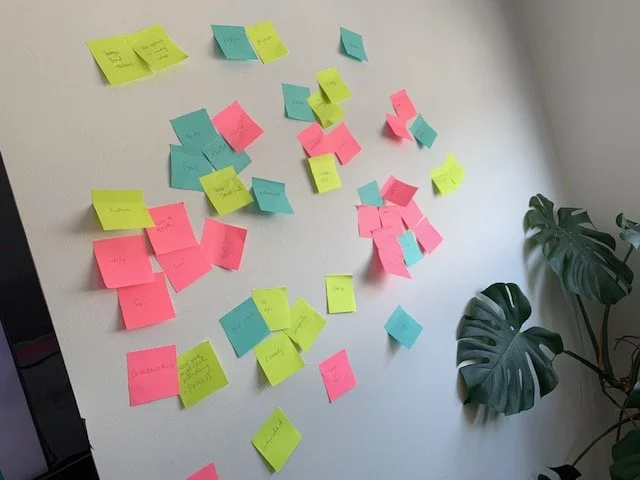
The ideas written on post-it notes by the team during a workshop always tell me way more than the original brief did.
This particular client went on to say that what had really meant the most to her, more than the design itself, was being able to see how much of what was in front of her traced directly back to feedback from the staff briefing we’d done earlier in the process. Little comments. Small frustrations. Suggestions people had made almost casually. Things that had been quietly folded in, and that the team could see when they looked at the drawings.
She said the team were excited. They felt heard, and seen, and valued. Not because anyone had stood up and told them they were, but because the space they were about to work in had their fingerprints on it.
And the thing is, this wasn’t the version of the project she thought she was buying when we first started. The original brief, for all intents and purposes, was a few meeting rooms and a general refresh. What she’d originally been picturing was calling in a builder and doing a bit of a reshuffle. What she ended up with was a forward-planned environment designed around how her team actually works, with the team’s voices threaded through it.
That’s the part I think most leaders don’t realise they’re also buying when they commit to a proper briefing process. It’s not just a better design outcome, although you do get that. It’s what the process itself does for the team, before the space is even built.
Because when people can see their own thinking reflected in decisions the business has made, something quietly shifts. They feel invested in the outcome. They’re more engaged with the space when it lands. They tell their friends and family about it. They bring a different energy to their work, because the business has already shown them, in a very concrete way, that their experience matters.
Here’s the pattern that shows up on almost every workspace project I do. The brief a client walks in with is almost never the brief that emerges once we’ve run a proper survey and workshop process. And the thing that makes the difference isn’t some clever design move. It’s just asking the right questions, early, of the right people. It’s structured curiosity, really. And what it surfaces is always richer than what any single person, even the one at the top, could have articulated on their own.
Because you don’t know what you don’t know!
That’s the whole point. You can’t write a brief around things you haven’t yet recognised as problems. And the team, who are inside the daily experience of the space, often know things that leadership doesn’t, not because leadership isn’t paying attention, but because when you’ve got used to something you stop seeing it. The briefing process is the thing that makes all of that visible.
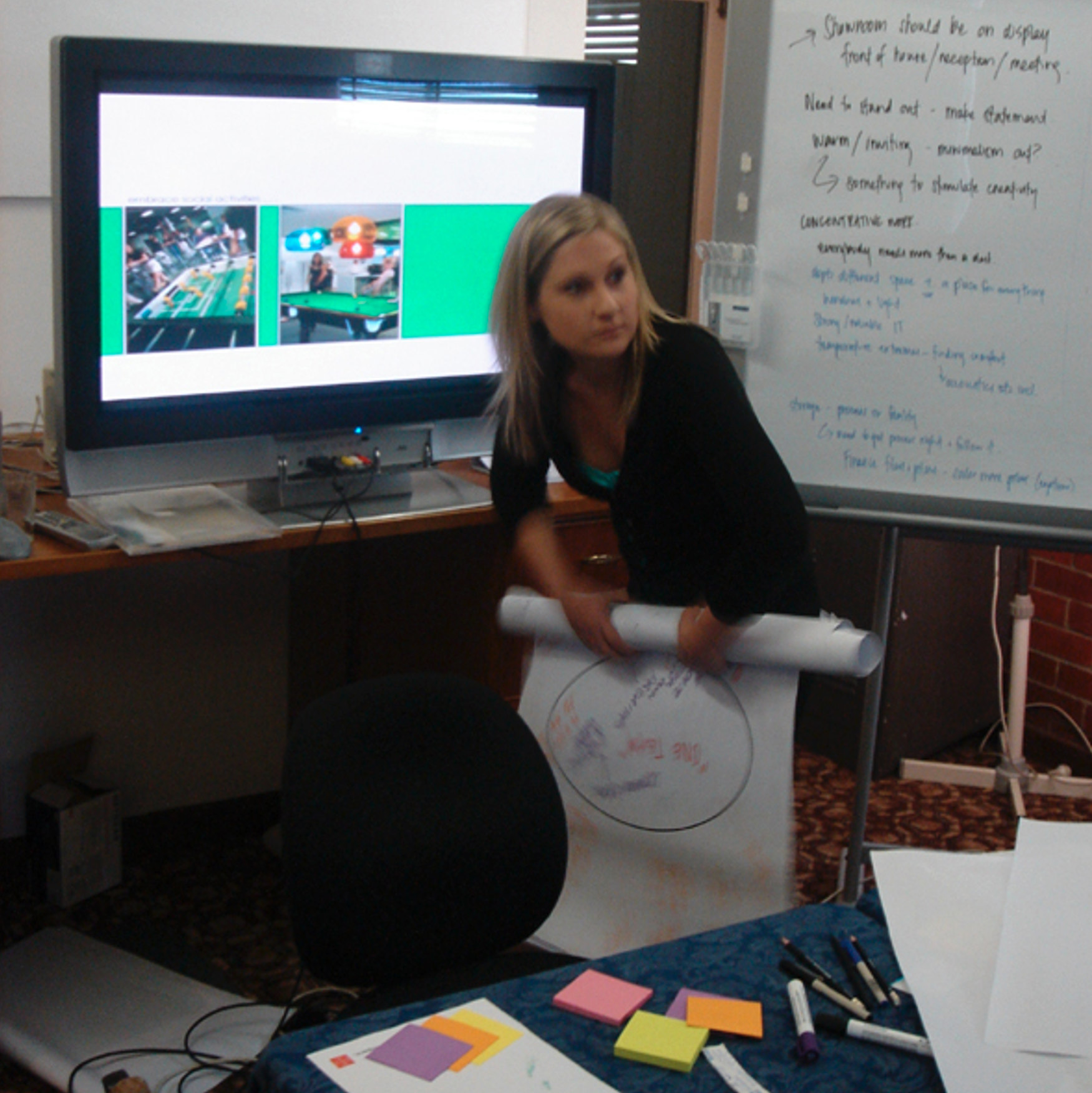
The end of a briefing workshop, many years ago now. Still doing the same thing, still loving it, and still learning from every one I do.
I’ve always believed the design outcome improves dramatically when you start with strategy rather than layout. That bit I can argue on the numbers, because the mistakes that happen without a proper brief are the expensive ones, and they tend to show up six or twelve months after move-in, when the space has quietly started working against the business again.
But the bit I don’t talk about as much, and the bit this week reminded me of, is what the process does for the people inside the business while it’s happening.
The feeling of being asked, properly. Of being listened to. Of seeing your small suggestion turn into a solution you get to use every day. That’s something a finished office can’t really manufacture on its own. It has to be designed in, earlier, as part of the process.
And if you want your team to want to come to work, to feel engaged, to do their best work when they’re there, that part might matter more than any finish, any piece of furniture, any layout decision.
It’s the kind of thing you only really see in the feedback. And honestly, that’s what makes what I do feel truly worthwhile.